
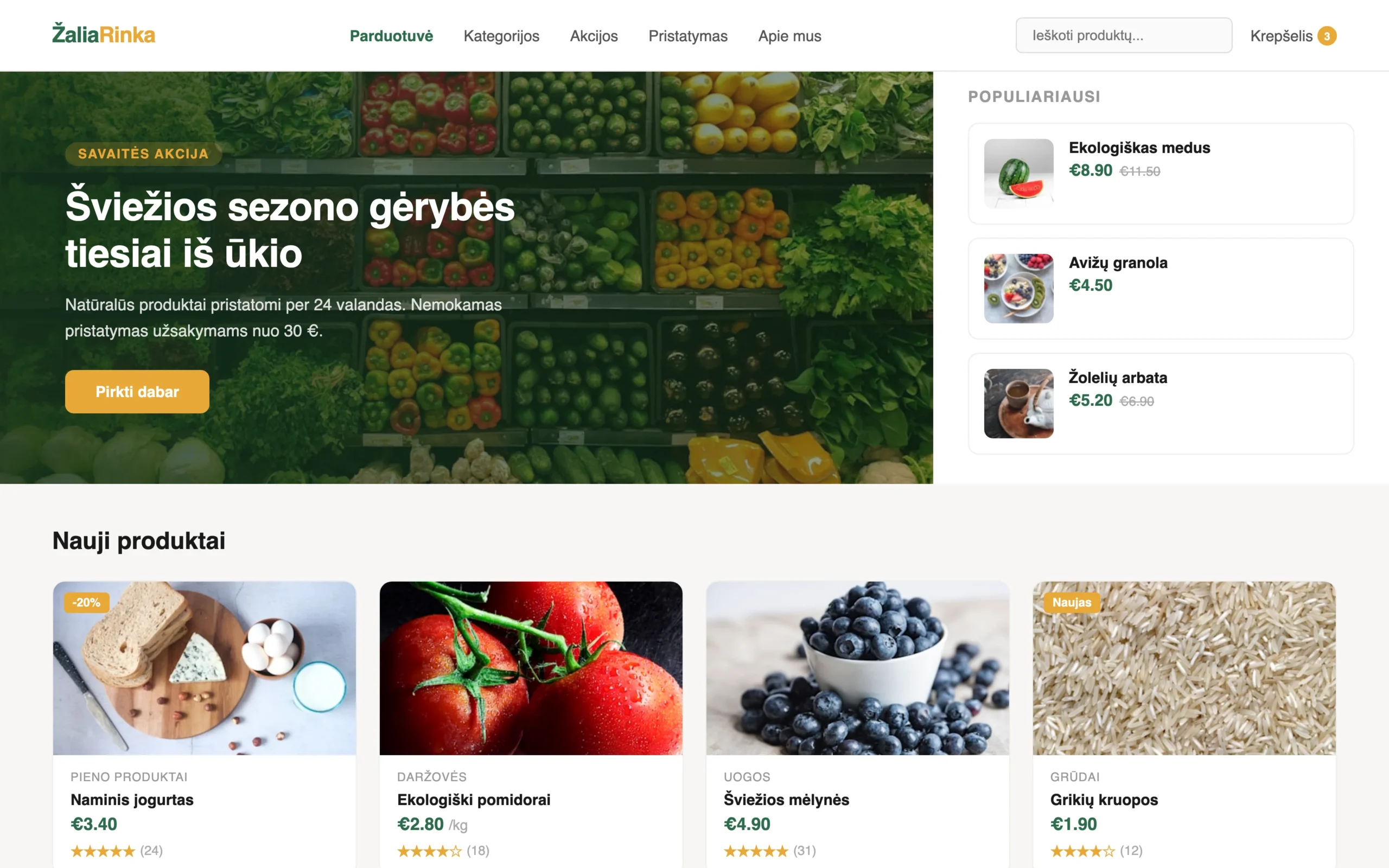
Selling online to customers in several EU countries is easier than it was a few years ago: one currency in much of the Union, common consumer rules and a single VAT reporting portal. It is still more than “put products on a website”. Below is a practical checklist of what a small business needs to decide before launching an online store in the EU: platform, hosting, payments, delivery, VAT and the legal basics.
This is a practical overview, not legal or tax advice. Rules differ by country and by business type, so confirm the details with an accountant or lawyer before you launch.
1. Choose a platform you will not outgrow
For a small and medium range we usually suggest WooCommerce on WordPress: there is no monthly platform fee, the store and the data belong to you, and it connects to most EU payment and delivery providers. Rented platforms such as Shopify are quick for testing an idea, but monthly fees and add-ons grow with sales, and moving later is not simple. We compare the options in our online store development page and in the article on building a store from scratch.
2. Hosting: keep it fast and keep the data in the EU
A slow store loses buyers, so hosting matters from day one. For EU customers, choose a provider with servers in Europe: pages load faster for your visitors, and it makes your GDPR documentation simpler because customer data stays inside the EU. Plan roughly €60-150 per year for a small store, and remember that introductory promotional prices rise when you renew. More on running costs in how much website maintenance costs per year.
3. Payments: cards plus the methods your market uses
Cards (Visa, Mastercard) work everywhere, and card payments in the EU use strong customer authentication (SCA), so the checkout asks the buyer to confirm in their banking app. On top of cards, buyers in many countries expect their local method. A few well-known examples:
- Netherlands - iDEAL, an online bank transfer used for most web payments.
- Belgium - Bancontact.
- Poland - BLIK and fast bank transfers.
- Germany - PayPal and invoice or instalment options such as Klarna are widely used.
- Baltics - online banking payments through local providers.
Multi-country providers such as Stripe and Mollie support many of these methods in one integration, which is usually simpler than connecting a separate provider for every country. Fees vary by method and provider, so compare them before choosing and check your expected order value.
4. Delivery: decide countries and prices up front
List the countries you will actually ship to, the carriers you will use and the price for each zone. Parcel lockers and pick-up points are popular in many EU countries, and offering them can lift conversion. Show delivery prices before the last step: “contact us about delivery” puts buyers off.
5. VAT when you sell to consumers in other EU countries
For business-to-consumer sales, prices shown to consumers include VAT. When you sell goods to private customers in other EU countries, a combined EU-wide threshold of €10,000 per year applies: below it you can keep charging your home country’s VAT, above it you generally charge the VAT rate of the customer’s country. The EU’s One-Stop Shop (OSS) lets you report and pay that VAT through a single portal in your own country instead of registering in every state. Ask your accountant whether you should register for OSS and how to set up VAT rates in your store.
6. Legal basics every EU store needs
- Privacy policy and cookie consent - GDPR and the ePrivacy rules apply across the EU, so tell visitors what data you collect and ask for consent where it is required.
- Terms and conditions - seller details, prices, delivery, payment and returns.
- Right of withdrawal - for most distance sales to consumers, buyers can withdraw from the contract within 14 days, with some exceptions, and you must inform them of this before they buy.
- Imprint - some countries, for example Germany, require a legal notice (Impressum) on commercial websites.
- Accessibility - the European Accessibility Act applies to many consumer e-commerce services from June 2025. Micro-enterprises can be exempt, so check whether it applies to you.
7. Language and localisation
You can start with English, but customers buy more readily in their own language. Start with one or two markets, translate the product pages, delivery information and checkout, and add more countries as orders arrive. Keep prices in euros where you can, and show prices the way local customers expect.
8. Emails and trust
An order confirmation, a shipping notification and a review request are the minimum. Abandoned-cart and welcome emails often pay off fastest: see our guide to email automation for online stores. Visible reviews, clear returns information and a real contact address also build trust with buyers who have never heard of you.
What it costs and how long it takes
Building an online store with a catalogue, payments and delivery indicatively costs from €1,400 and takes about 4-7 weeks, depending on the range and integrations (see the online store plan and the article on website cost in 2026). Each year add hosting (about €60-150), a domain (about €10-20) and payment fees. Multi-country selling can add work for extra languages, VAT settings and local payment methods, which we price individually after assessing the scope.
The most common mistakes
- Launching in too many countries at once - start with one or two markets and learn from real orders.
- Only offering cards - in some countries the local payment method decides whether the buyer completes the purchase.
- Ignoring VAT until the first foreign order - set it up before you sell, not after.
- Copying legal texts from another site - they must match your business, your countries and your data processing.
- Not testing the whole purchase path - place a real order yourself, from the cart to the confirmation email.
Frequently asked questions
Can I sell to the whole EU from one store?
Yes. One store can serve several countries with different delivery zones, VAT settings and languages. The practical work is in payments, VAT and local content, which is why we recommend starting with one or two markets.
Do I need a separate store for every country?
Usually not. A single store with language versions and delivery rules per country is easier to maintain. Separate stores only make sense when markets differ greatly in range, prices or legal setup.
Do you build stores for customers in other EU countries?
Yes. We are a Lithuanian, EU-based company, quote in euros and work remotely in English, with working progress you can review every week. Start with a short call: get in touch and we will give an indicative price after discussing your range and target countries.
More articles
 Business An online store from scratch: the path to your first order
Five steps between "we need an online store" and the first paid order: range, platform, payments, content and launch.
 Marketing Website promotion: where to start with SEO?
Launched your website but the phone is silent? Four SEO jobs, done in the right order, before you pay a cent for…
 Business CRM or ERP: what does a small business actually need?
"We need a system" can mean three very different things. How CRM, ERP and a custom system differ, and how to choose…